
Searching Montgomery County Criminal Dockets
The county's main public index is Montgomery County Clerk of Courts Public Records Online v3. It is known as PRO. It covers Common Pleas General Division criminal cases and County Municipal Eastern and Western Division cases. Some other clerk-held divisions appear there too. That reach is why court choice matters before you type anything. Pick CRIMINAL for a General Division felony. For an adult county Municipal charge, apply the Eastern or Western criminal filter. Dayton and Kettering run their own municipal courts, so their cases are elsewhere. A case number is the cleanest way in. A party name works too, though common names pull up piles of records. PRO takes last name, first name, and company name. It also accepts ticket number, case type, and begin and end dates. The public interface caps results at the first 1,000. So add a first name, a date range, or a case-type filter when a broad name floods the screen.
- Open PRO and remain on General Search for a case, party, company, or ticket.
- Enter the exact case number or ticket number if available. Otherwise, enter a last name and add a first name.
- Select CRIMINAL for a Common Pleas case, or the correct Eastern or Western municipal criminal category.
- Use dates or another field to narrow a result set, then open the matching case and read its newest docket entries.
- Use the clerk’s records process rather than a browser printout when a certified docket, entry, or judgment is needed.
Montgomery County CR and CRBE Filters
PRO's case-type labels tell you court level and charge category at a glance. Common Pleas General Division uses CRIMINAL. The county Municipal system splits into paired East and West categories instead. Local shorthand includes CRBE and CRBW for criminal misdemeanor East and West. It adds CRAE and CRAW for felony East and West. Those municipal felony labels often mark the preliminary stage. A felony later continues in Common Pleas. Geography drives the split. The Eastern Division covers Huber Heights, Riverside, and its assigned area. The Western Division serves Trotwood, Brookville, and its own territory. A citation or filing names the court location, so start there. Pick the wrong East or West filter. A valid Montgomery County criminal docket can then seem to vanish. Note: A case-type label is a search aid. It is not a final statement of guilt, disposition, or where a later appeal is pending.
Inside a Montgomery County Criminal Docket
According to the Clerk, the entries in PRO match the official docket exactly. Read the event list in date order. Then check the newest entry against any earlier hearing notice. Detail varies by court and case type. But the core fields do the same work everywhere: they explain what the record shows.
| Case number | Identifies the court, year, type, and sequence. General Division examples use a year and CR code, such as 2025 CR 01234. |
|---|---|
| Court and case type | Shows whether the matter is General Division or a county Municipal East or West category. |
| Docket entries | Chronological filings, notices, orders, settings, and case events recorded by the clerk. |
| Judge and setting | A docket or calendar can identify the judge, date, time, event, floor, and room for a listed court event. |
| Documents | Associated PRO images are redacted and may be delayed, unavailable, or restricted even when an event entry is present. |
Short event labels need context. A docket line for a plea hearing only tells you the event was scheduled or held. Whether the court entered a disposition comes from the later entry or judgment.
Montgomery County Criminal Docket Calendar Grid
The General Division daily docket grid does a different job than the full PRO case docket. Its headers are NAME, JUDGE, TIME, CASENUM, EVENT, FLOOR, and ROOM. Use it to confirm a same-day or near-term appearance. The case docket still supplies the full chronology. General Division also posts a recurring judge and arraignment schedule. Arraignment and grand-jury dockets run Tuesday and Thursday at 8:30 a.m. The assigned judge rotates. A recurring slot does not prove your case is still set there. If records conflict, a continuance, a new notice, or clerk confirmation controls.
How a Criminal Case Moves
Think of a Montgomery County criminal docket as a dated register, not a story. A Common Pleas case may run from complaint, indictment, or information to arraignment, then bond or release conditions, pretrial notices, motion hearings, a plea or trial setting, disposition, sentencing, and appeal or later post-judgment activity. Municipal cases can look different. A felony may start there before Common Pleas takes over the later case.
Docket flow: Filing → Arraignment → Pretrial → Plea or Trial → Disposition → Sentencing
Always read a stage against the entries that follow it. An arraignment decides nothing. A plea hearing alone proves no final result. The court's recorded outcome lives in the final judgment entry and the docketed disposition.
Montgomery County Plea and Disposition Entries
The daily docket leans on local event labels. These include arraignment, scheduling conference, probation report set, forensic report set, plea hearing, and final pretrial. Each label explains why a case sits on the calendar. None of them states the end result by itself. That distinction keeps a scheduled hearing from being mistaken for a conviction, dismissal, or sentence.
- Arraignment
- An initial criminal appearance concerning charge, plea, or process issues.
- Pretrial
- A case-management setting before trial, often used to address readiness or motions.
- Continuance
- A docketed postponement of an earlier hearing or deadline.
- Disposition
- The docketed end result of a charge or case, read with the actual entry or judgment.
Note: A docket entry naming a court date can go stale fast in Montgomery County. Check the newest order, notice, or result before you count on any older date.
Courts That Hold Criminal Dockets
Montgomery County Common Pleas Court, General Division, holds the felony criminal dockets. Its records sit inside the Clerk's PRO coverage. The Montgomery County Municipal Court Eastern and Western Divisions handle adult misdemeanor, traffic, civil, and small-claims matters in their statutory territories, along with felony preliminary stages. Their clerk-held criminal case categories are in PRO as well. Probate and Juvenile are separate Common Pleas divisions. Neither shows up as a PRO criminal-search category. Juvenile delinquency records follow their own clerk and confidentiality rules. A city municipal case outside the East or West territory belongs to that city court. So go through its official portal or clerk rather than fiddling with PRO filters.
Montgomery County Specialty Criminal Dockets
Montgomery County General Division runs five specialty programs: MARC, RISE, Veterans' Treatment Court, Mental Health Court, and Kushinda Court. None of them keeps its own database. Under the local program rules, an accepted case moves from its original judge to the program judge, which means the underlying PRO criminal case is still where any Montgomery County criminal docket search should begin.
The Ohio sealing and expungement statute is one official source behind the access limits that can shape what a criminal case file shows.
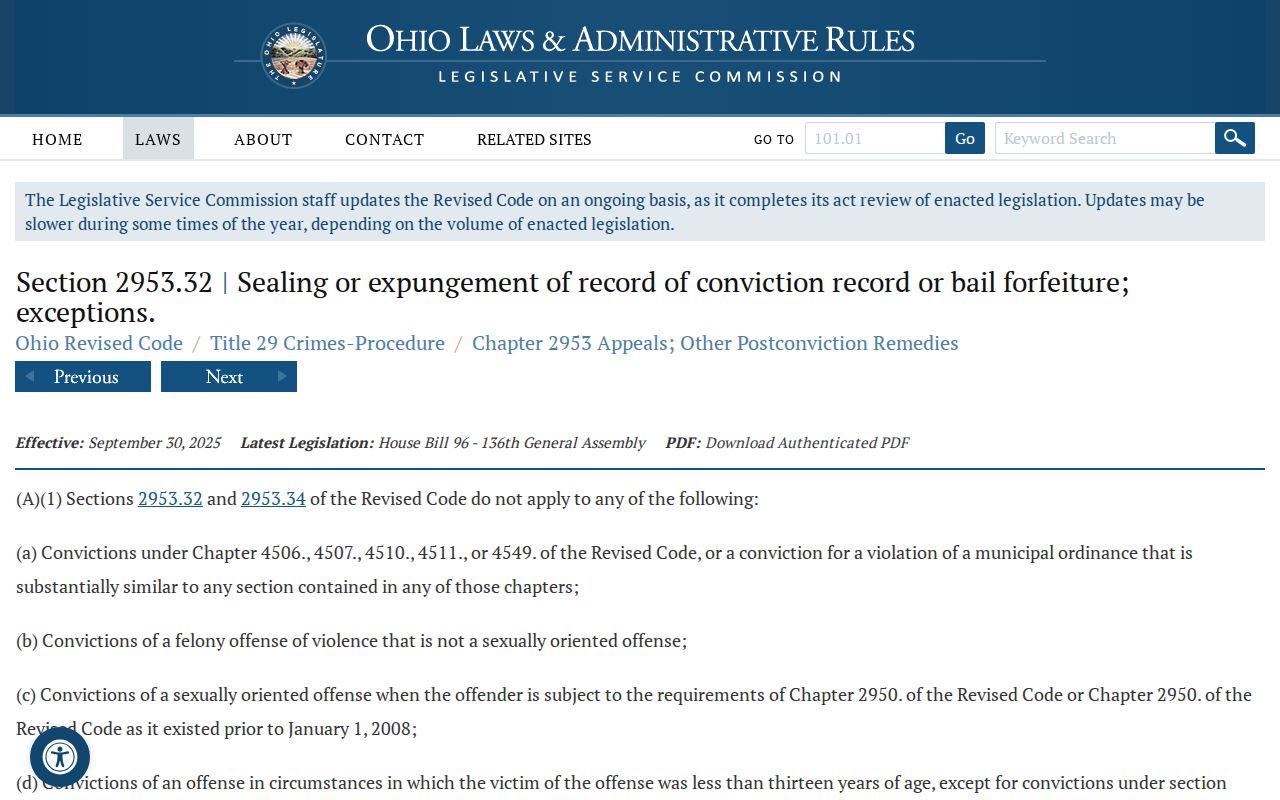
Joining a specialty docket does not put every program or treatment paper online. Separate access rules govern the public criminal docket and any restricted filing.
Sealed Dockets and Public Access
Ohio Rules of Superintendence 44 through 45 presume the public can view court records, with defined exclusions and restrictions on top. The Montgomery County Clerk's public-record statement puts it plainly: PRO is a convenience view, not a certified record. Covered traffic, criminal, civil, domestic relations, and appellate court records stay open for in-person viewing during normal business hours unless a court orders otherwise.
Access rule: A missing PDF does not establish that a criminal docket is sealed. PRO images can be within the normal 48 to 72 hour redaction window, confidential, technically unavailable, or intentionally suppressed online.
Some protection orders vanish from the online docket by design. The clerk suppresses online information for Civil Stalking or Sexually Oriented Offense protection orders and for Domestic Violence Protection Orders. General Division Local Rule 2.06 draws its own line. It separates material barred from remote access from material barred entirely. Juvenile records sit outside PRO. They carry separate statutory restrictions.
Montgomery County Missing Criminal Documents
Redaction comes before images. The clerk describes that processing as 48 to 72 hours after filing. So an event entry can show up in the docket while its image is still pending. A missing image has other possible causes too. Those include confidentiality, a technical problem, an unscanned record, a misassociated image, or an access restriction. None of that is a recorded disposition.
The Ohio law on orders following sealing or expungement is another official source that matters. It applies when a case stops appearing the usual public way.
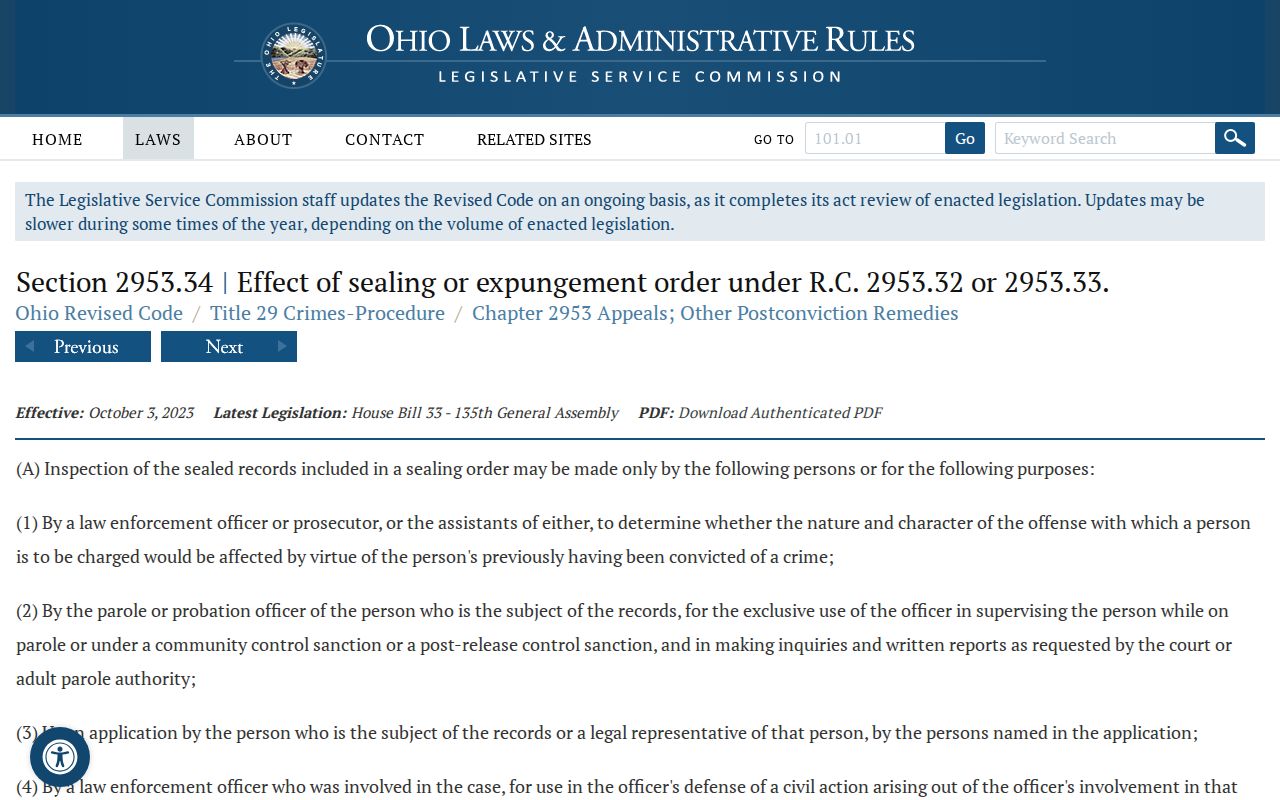
Need direct confirmation of a file? Identify the court and case number first, then ask the clerk or court about the access process that applies. A blank public search never proves a court record never existed.
Montgomery County Certified Criminal Dockets
PRO is public, but it cannot certify anything. For that, turn to the Clerk's records request information. Regular copies run $0.10 per page. Certified copies cost $1 per page. Authenticated or exemplified copies are $5.
A Common Pleas request can go in person or by mail to Records Section, 41 N. Perry Street, Room 104, Dayton, OH 45422. Email works too, at recordssection@mcohio.org. County Municipal copy requests work in person, by telephone, fax, or mail. They run through the Eastern or Western Division. Mailing one? Get the page total, pay in advance, and enclose a self-addressed stamped envelope.
Give the clerk enough practical detail to find the record: the case number, court or division, the item you want, the copy type, and how you want it delivered. If you have already tracked down a covered case by name or number, the county's case lookup information can narrow the record. That helps before you pay for copies.